
Jack MacBryan
England
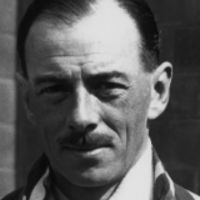
INTL CAREER: 1924 - 1924
Full Name
John Crawford William MacBryan
Born
July 22, 1892, Box, Wiltshire
Died
July 14, 1983, Cambridge, (aged 90y 357d)
Batting Style
Right hand Bat
Education
Exeter School; Cambridge University

Jack MacBryan, who died a few days before his 91st birthday, was England's oldest surviving Test cricketer. Captain of cricket at Exeter School, he was in the XI at the RMC Sandhurst when he played for Somerset in their last two matches in 1911 and against Surrey at The Oval was second-top scorer with 20 in a total of 97. In the next three years he made a few appearances for the county and in 1914 scored 61 against Gloucestershire. But in August that year he was wounded in the right arm at Le Cateau and spent the rest of the war as a prisoner, latterly in Holland, where he was able to play plenty of cricket. In 1919 he was up at Cambridge, but, though he scored 90 against the Navy, was only twelfth man at Lord's. However, he topped the Somerset averages and indeed did so in six of the eight seasons 1919-26. He duly got his Blue in 1920. His two best years for Somerset were 1923, when he made 1,507 runs for them with an average of 37.67, and 1924, when his aggregate was 1,355 and his average 43.70. By now he was near the England side. In 1923 he made top score, 80, for the Rest against England in the Test trial at Lord's and in 1924 was picked for the Gentlemen at Lord's, and again made runs in a Test trial. As a result he was selected for the fourth Test against South Africa at Old Trafford, but the match was ruined by rain and he did not bat. Many expected him to be in the side for Australia, but his chance was probably lost when the doctors passed J. W. Hearne as fit. In any case, the team was overweighted with openers: in addition to Hobbs and Sutcliffe, there were Sandham, Whysall and J. L. Bryan. Instead MacBryan went with the Hon. L. H. Tennyson's unofficial side to South Africa, where he was only moderately successful. Two more seasons for Somerset virtually concluded his career. Though he continued to play occasionally until 1931, he was never after 1926 in sufficient practice to do himself justice, and so, like many other amateurs, he dropped out just when he was at his best. Short but strongly built, he was primarily a back-foot player and a fine cutter and hooker. He also played well off his legs and was a far better bat on a turning wicket than most amateurs. Moreover, lack of inches did not stop himcountering Tate at his best by playing forward and getting well over the ball. In all his movements he was neat and elegant. In the field his wounded arm prevented him throwing far, but he was good near the wicket, especially at short-leg. A rich character, he was in his element in a side captained by John Daniell and containing R. C. Robertson-Glasgow, G. F. Earle and J. C. White, with the great Sam Woods, to whom he acknowledged a special debt for teaching him to play Tate, in support off the field.
Wisden Cricketers' Almanack
Terms of Use|Privacy Policy|Your US State Privacy Rights|Children's Online Privacy Policy|Interest - Based Ads|Do Not Sell or Share My Personal Information|Feedback
© 2024 ESPN Sports Media Ltd. All rights reserved